AI Flash Lab
Facilitator Toolkit

A flexible framework for AI + Education design

Welcome! This toolkit contains everything you need to run an AI Flash Lab where participants design AI-powered solutions for educational challenges in your context.

This framework adapts to many AI+education challenges—from student engagement and mental health to educator professional development to building personalized learning systems.

Purpose: This active workshop immerses participants in the roles of Designer, Builder, and Advocate. Through AI-assisted tools, teams move from problem identification to prototype to pitch in a learner- and research-centered way. Participants walk away with an early-stage solution, a network of co-designers, and R&D skills to help design the future they want.

By the end of the workshop, teams will have:

A clear problem statement
Either a working or a paper prototype
A 2-minute pitch delivered to peers or judges
A network of co-designers

Two Versions

2-Hour Version

Teams pitch to the whole group (no judges required). Perfect for workshops with time constraints while still delivering a complete design experience.

3-Hour Version

Teams pitch to judges for structured feedback. Ideal for deeper engagement and professional development with expert evaluation.

The Workshop at a Glance

2-Hour Version

Fast-paced & energetic
Best for
Classrooms, limited time
Participants
12-25 people
Pitching
To whole group
Judges
Not required

Timeline

0:00-0:20
Introduction & Team Formation
0:20-0:50
Designer Hat (30 min)
0:50-1:20
Builder Hat (30 min)
1:20-1:40
Advocate Hat (20 min)
1:40-2:00
Pitch & Quick Reflection

What “hats” do participants wear?

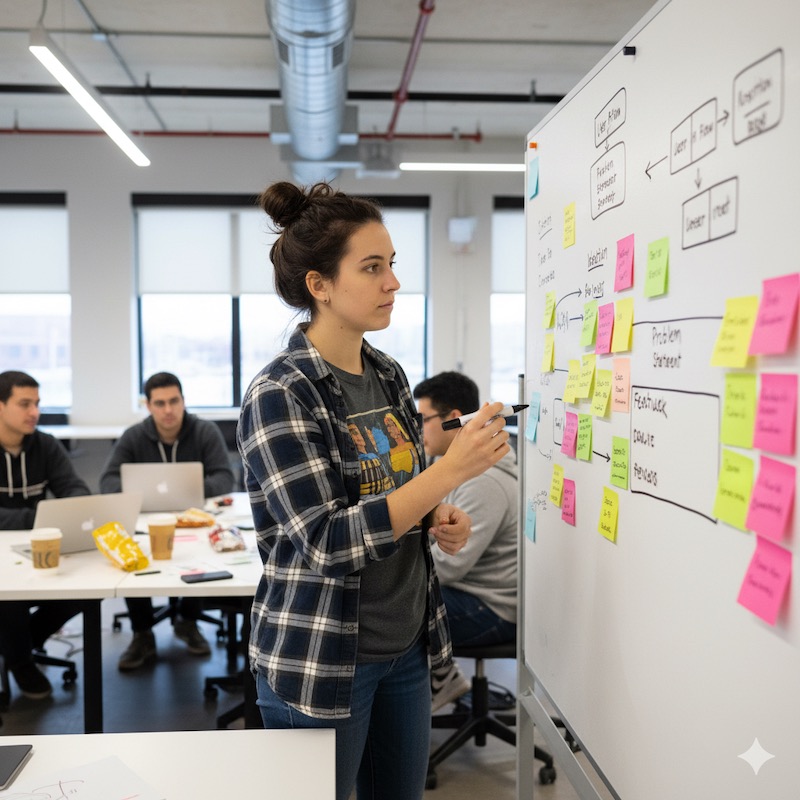
Designer participants collaborating

Designer

Develop a problem statement and user journey

View AI Boosts
Builder participants creating prototypes

Builder

Create a prototype that shows your solution
View AI Boosts
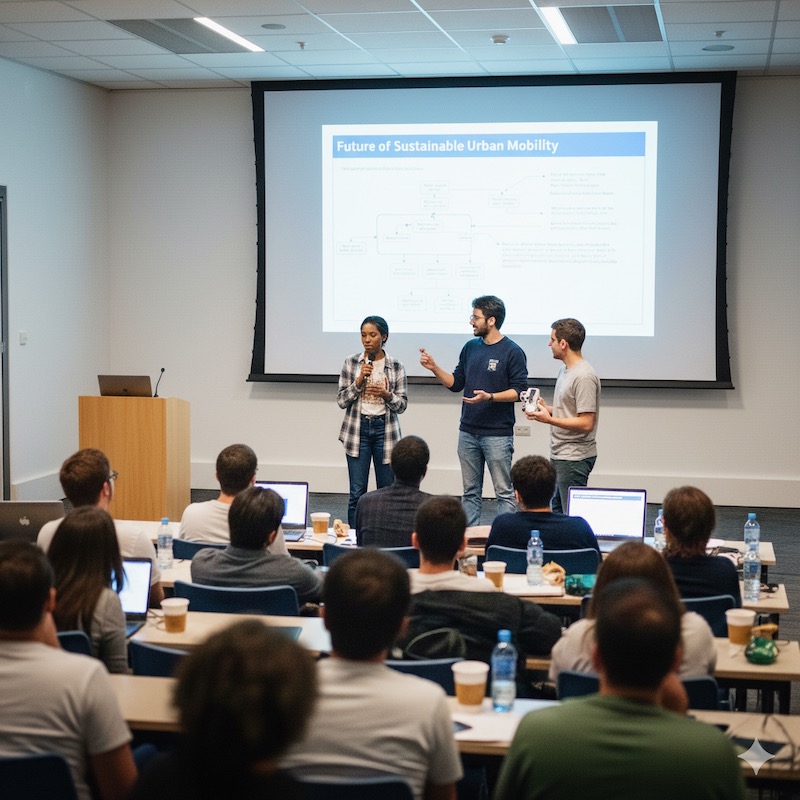
Advocate participants presenting

Advocate

Deliver a compelling 2-minute pitch

View AI Boosts

Key Principles

Human First, AI Second

Teams discuss ideas before using AI tools

Fail Fast, Learn Faster

Prototypes are meant to be messy

Empathy-Driven

Keep your target learners at the center of every decision

Adaptable to Many Educational Challenges

This workshop framework works across contexts. Here are example challenge areas where teams can apply the Designer-Builder-Advocate approach:

Student-Focused Challenges

Mental Health & Well-Being
Attendance & Engagement
Student Agency & Voice
Community Connection
Reading & Literacy

Educator-Focused Challenges

Professional Learning
Instructional Skills & Practice
Curriculum & Assessment Tools
Administrative Support
Retention & Hiring
Work-Life Balance

Systems & Infrastructure

Personalized Learning
College & Career Readiness
Supporting Diverse Learners
Social-Emotional Learning
Technology Integration
English Language Learners

Frequently Asked Questions

2-hour: Better for classrooms, limited schedules, or when judges aren't available. Teams still get full design experience but with tighter timeframes.

3-hour: Ideal for professional development, conferences, or when you want deeper engagement and structured feedback from experts.

Possible but not recommended. Minimum 2 facilitators (1 lead + 1 roamer). Ideal is 3-4.

Run the 2-hour version instead! Teams pitch to each other, which still provides valuable feedback and community building.

You don't need to be an AI expert! Review the AI Tool Tutorials document and play with ChatGPT or Claude for 30 minutes. That's enough.

Yes! Adapt examples, timing, and materials for your context. But keep the 3-hat structure and human-first approach.

  • 2-hour version: 12 participants (3 teams of 4)
  • 3-hour version: 16 participants (4 teams of 4)
Below that, the energy and peer learning suffers.

  • 2-hour version: 25 participants (6-7 teams) with 2-3 facilitators
  • 3-hour version: 32 participants (8 teams of 4) with 3-4 facilitators
Beyond that, it's hard to provide individual team support.

No! The workshop guides participants through understanding the challenge as part of the design process. Curiosity and passion for the topic matter more than prior expertise.

Use the Troubleshooting Playbook guidance on this. Ask probing questions, redirect gently, and flag to lead facilitator if needed.

The toolkit is designed for in-person, but virtual could be possible with modifications (although we haven't run it this way yet!)

Yes! While our materials use learning differences as the example, this framework is designed to be flexible. The Designer-Builder-Advocate structure works whether you're tackling student mental health, teacher professional development, personalized learning infrastructure, or other AI+education challenges. The process stays the same—you just center it around your specific context and learners.